
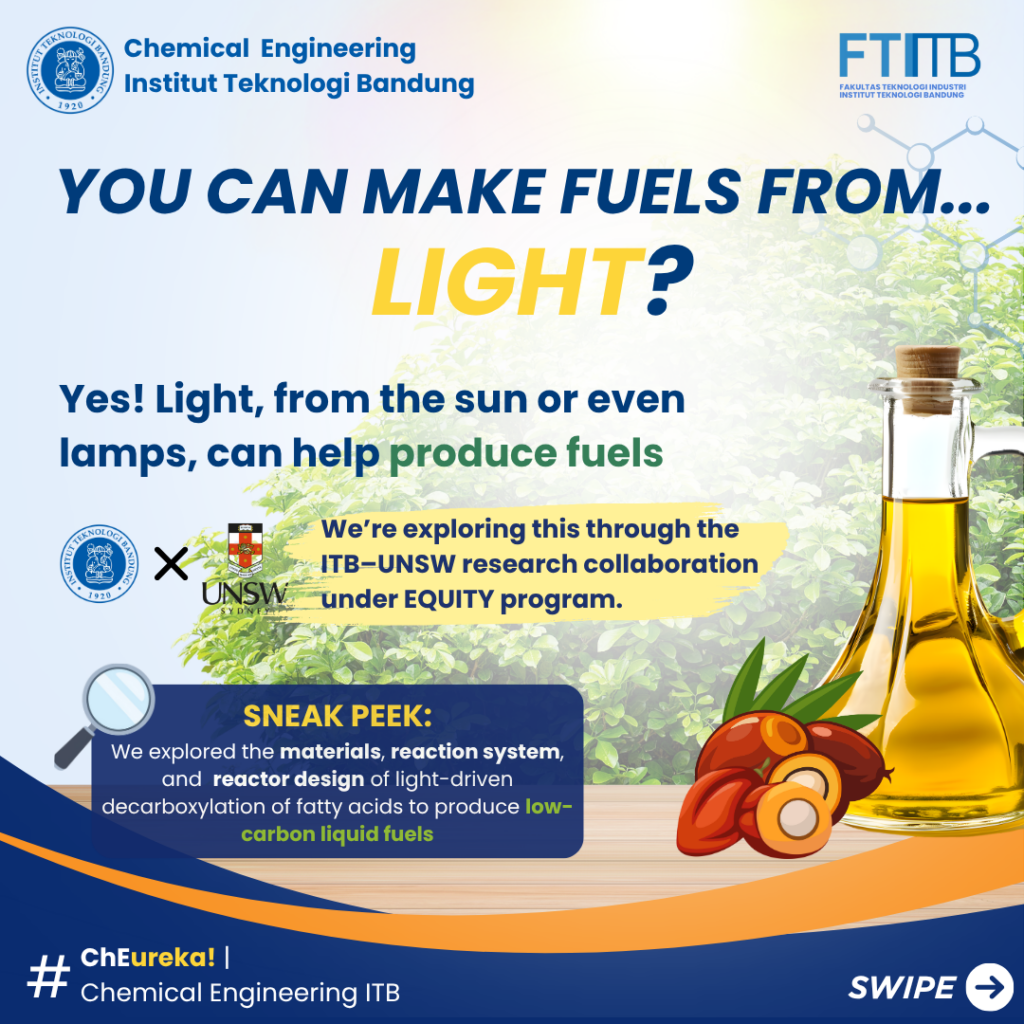
Renewable resources such as plant oils, used cooking oil, and other lipid-based materials can provide fatty acids as sustainable carbon building blocks for future fuels.
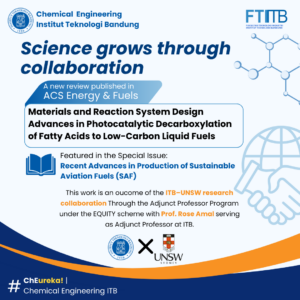
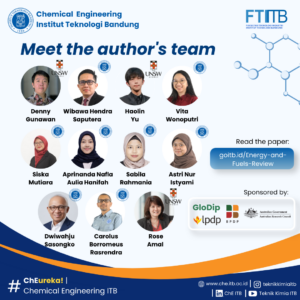
A new review by researchers from Chemical Engineering, Institut Teknologi Bandung (ITB) and Chemical Engineering, UNSW Sydney explores the latest advances in photocatalytic decarboxylation—a light-driven process that converts fatty acids into valuable hydrocarbons that could contribute to the development of more sustainable liquid fuels.
Rather than focusing only on photocatalyst performance, the review brings together three key elements needed to advance the technology:
🔬 Materials design
⚙️ Reaction mechanisms
💡 Photoreactor engineering
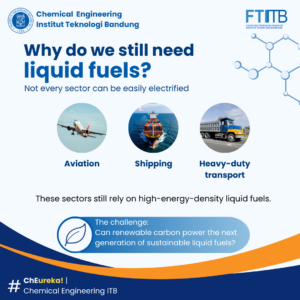
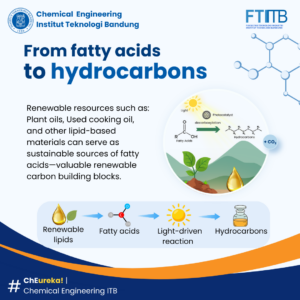
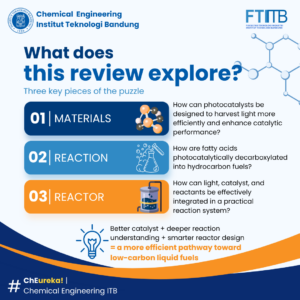
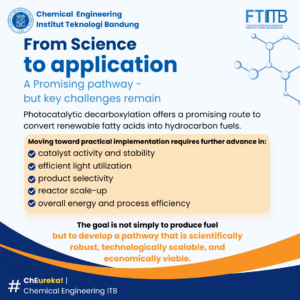
The paper also highlights the remaining scientific and engineering challenges that must be addressed to move photocatalytic fuel production from laboratory-scale studies toward practical applications.
Published in ACS Energy & Fuels, the review is featured in the Special Issue Recent Advances in Production of Sustainable Aviation Fuels (SAF).
This work is also an output of the Adjunct Professor Program under the EQUITY scheme, strengthening research collaboration between ITB and UNSW, with Prof. Rose Amal serving as Adjunct Professor at ITB.
🔗 Read the paper: goitb.id/Energy-and-Fuels-Review
 Bahasa Indonesia
  English